
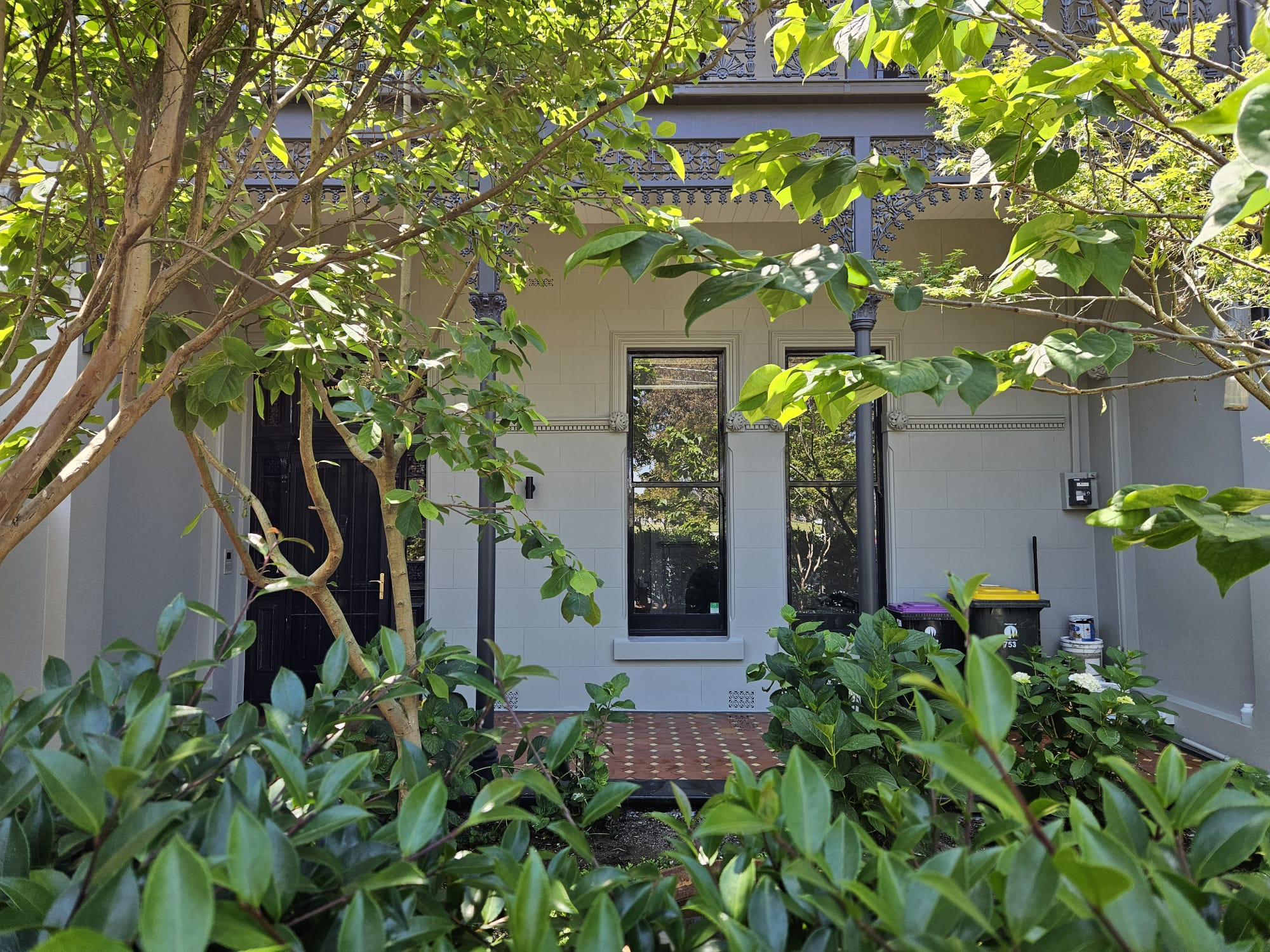
Heritage Restoration
Heritage properties need materials that let the building breathe and tradespeople who know why that matters. We restore Melbourne's Victorian, Edwardian, Federation and Interwar homes using lime mortars, breathable renders and traditional plaster techniques — repairing facades, replicating original cornice and decorative detail, and undoing the damage caused by modern cement and sealed paint systems.
We provide heritage restoration services across Melbourne and regional Victoria, including the Macedon Ranges, Bendigo region, and Northern Corridor.
GET A FREE QUOTE
Tell us briefly what you need help with.
Restoring Melbourne's Period Homes Properly
Melbourne has one of the largest surviving stocks of Victorian, Edwardian and Federation housing in the world, and most of it was built the same way: solid double-brick walls, lime mortar, lime-based render and no damp-proof course. Those walls were designed to breathe. When moisture gets in — and in Melbourne it always does — it moves back out through the mortar and render as the wall dries.
Almost every heritage failure we're called to fix comes from that principle being broken. Hard cement render and plastic membrane paints seal the surface, so moisture and salt get driven deeper into the brick until the render blows off in sheets, mortar turns to sand and paint bubbles at skirting height. The repair isn't more sealant — it's removing the trapped-moisture system and rebuilding in materials the wall can work with.
How We Approach a Heritage Job
- Assess before we quote. We identify the era and construction of the building, test render for drummy sections, check mortar condition, and look for the water path causing the damage rather than just the damage itself.
- Match the original materials. Lime mortars and lime-based renders for solid brick, breathable mineral paints on external masonry, and traditional plaster techniques on internal walls and ceilings.
- Replicate the detail. Cornice profiles are taken from intact runs, decorative rosettes and corbels are cast to match, and layered paint is stripped back so original mouldings regain their definition.
- Respect the heritage overlay. We work to period-appropriate colour schemes and finishes, and can supply documentation to support your council application where a permit is required.
Period Features We Restore
- Ornate plaster cornices and ceiling roses
- Pressed metal ceilings and panels
- Rendered and tuckpointed brick facades
- Parapets, chimneys and decorative urns
- Timber verandahs, fretwork and turned posts
- Sash windows, front doors and fanlights
- Corbels, arches and hallway plaster sets
- Cast iron lacework, gates and fencing
Heritage Homes by Era
Victorian (1840s–1900). Single and double-fronted terraces with cast iron lacework, high ceilings and elaborate hallway arches. Typically solid brick with lime mortar — the era most damaged by modern cement repairs.
Edwardian & Federation (1900–1920s). Red brick with roughcast render gables, timber fretwork verandahs and leadlight. Render repairs here need careful texture matching so patches don't stand out across the facade.
Interwar (1920s–1940s). Californian bungalows and Old English styles with clinker brick, tapered piers and deep eaves. Usually more robust, but tuckpointing, render bands and timber joinery still need period-correct care.
Our Heritage Restoration Services
Heritage Repairs
Specialized repairs for heritage-listed and period properties. We understand the unique requirements and use appropriate materials and techniques.
Crack & Brick Repairs
Expert repair of cracks in masonry and brickwork. We use traditional methods to match existing mortar and maintain structural integrity.
Period Restoration
Authentic restoration of period features including cornices, ceiling roses, and decorative plasterwork to preserve your home's character.
Timber Restoration
Restoration of original timber features including window frames, doors, and decorative elements. We preserve and enhance natural beauty.
Façade Restoration
Complete façade restoration to return heritage buildings to their former glory while ensuring modern weatherproofing and protection.
Conservation Work
Careful conservation work that respects the history and craftsmanship of heritage properties while meeting contemporary standards.
What Heritage Restoration Actually Involves
Heritage restoration on Melbourne's Victorian, Edwardian and Federation housing stock calls for a different mindset to modern render and plaster work. Lime-based render and lime mortar were used throughout these periods because they're breathable, allowing moisture to pass through the wall rather than trapping it behind a hard, sealed cement finish.
We work on ornate cornices, corbels, decorative urns and finials, and original ceiling roses, matching plaster profiles by taking a mould from an intact section where one survives, or carving a new pattern to match photographs and remaining fragments where the original detail has been lost entirely.
Sash windows are a regular part of this work too, since original box-frame sashes on Victorian and Edwardian homes often have failed cords, painted-shut sashes or rotted lower rails. Where possible we repair the original joinery and reglaze rather than replacing with a modern aluminium unit that changes the home's street character.
Common Problems We See
Cement render trapping moisture
A previous owner's well-meaning cement patch over original lime render often traps moisture behind it, accelerating decay in the brickwork and causing the cement patch itself to blow off within a few years.
Lost or damaged ornate plasterwork
Ceiling roses, corbels and decorative cornice profiles get damaged during renovations or simply degrade over a century, and matching replacements need casting from a mould rather than a generic modern profile.
Painted-shut or failed sash windows
Decades of repainting without maintenance leaves sash windows painted shut, with perished cords and swollen frames that no longer run smoothly in their original box frames.
Weathered urns, finials and parapet detail
Rendered or cast decorative elements on parapets and gable ends weather faster than the main wall due to greater exposure, and often need careful remoulding to preserve the original silhouette.
Incompatible modern repairs
Gap-fillers, silicone sealants and gypsum-based products used in past repairs on lime-based homes often fail faster and can accelerate damage to the surrounding original fabric.
Signs You Need Heritage Restoration
- Cement render patches on an older home that look harder, flatter or a different colour to the surrounding original render.
- Damp patches or peeling paint on internal walls behind a section of external cement-patched render.
- Cracked or missing sections of an ornate cornice, ceiling rose or corbel in a period home.
- Sash windows that need to be forced open or won't stay up without a prop.
- Visible erosion or chipping on rendered urns, finials or parapet detailing along the roofline.
- A heritage overlay or planning requirement on the property affecting what materials and changes are permitted.
Not sure what you're looking at? Send us a photo through the contact page and we'll tell you honestly whether it needs attention now or can wait.
Repair or Replace?
Repair usually makes sense when
- • Original decorative plasterwork or joinery survives in a repairable condition, even if damaged.
- • A mould or template can be taken from an intact matching section elsewhere on the property.
- • Sash window frames are sound and only cords, weights or glazing need attention.
- • The property sits under a heritage overlay requiring like-for-like repair rather than replacement.
Replacement is the better spend when
- • Original detail has decayed beyond structural repair or is missing entirely with no surviving reference.
- • A previous incompatible repair has caused ongoing damage that needs full removal and reinstatement.
- • Sash frames themselves have rotted beyond the point timber splicing can restore them.
- • The client wants a heritage-style replica element where no original survives to match from.
Heritage work leans toward repair and conservation over replacement wherever original fabric survives, partly because materials like lime render and old-growth timber sashes were built to last and partly because heritage overlays often require it. Replacement is reserved for genuinely lost or unsalvageable elements, and even then we match materials and profiles closely.
Our Inspection Process
- 1
Material identification
We confirm whether existing render and mortar is lime-based or a later cement patch, since applying more cement over lime-based walls compounds moisture problems rather than fixing them.
- 2
Condition survey of decorative elements
Cornices, corbels, ceiling roses and external ornamentation are assessed and photographed in detail to plan whether repair, mould-casting or full remaking is needed.
- 3
Sash window function check
Each sash is checked for cord condition, glazing putty state, timber rot in the lower rail and sill, and how freely it runs in the box frame.
- 4
Heritage overlay review
Where a property has heritage protection, we check what approvals or material requirements apply before any external work begins.
- 5
Moisture and breathability assessment
We check how existing render and paint layers are performing in terms of allowing moisture to escape the wall, since trapped moisture is the root cause of most heritage masonry decay.
Materials & Products We Use
Lime putty and hydraulic lime render
Breathable render mixes that match the flexibility and vapour permeability of original Victorian and Edwardian wall construction, avoiding the trapped-moisture problems of modern cement.
Lime mortar for repointing
Used to repoint original brickwork so the mortar remains softer than the brick itself, which is how heritage masonry is designed to weather and be maintained over time.
Fibrous plaster casting compound
Used to cast replacement cornice, ceiling rose and corbel sections from a mould taken off surviving original detail.
Old-growth timber for sash repairs
Matched timber sections used to splice new timber into original sash rails and frames where rot has set in, rather than replacing the whole sash.
Traditional sash cord and weights
Braided cotton or synthetic sash cord and cast iron counterweights reinstated in the original box frame system to restore proper sash function.
Breathable mineral paints
Silicate or lime-wash based paints used over lime render finishes to maintain the wall's ability to release moisture rather than sealing it in with an acrylic film.
Expected Timeframes
| Job | Typical duration |
|---|---|
| Sash window service, single window | Half a day to 1 day |
| Lime render patch repair | 1-2 days plus extended curing |
| Cornice or ceiling rose mould and cast | 3-5 days |
| Full elevation lime re-render | 2-4 weeks plus curing |
| Parapet or urn restoration | 3-7 days depending on damage extent |
Weather, access and drying times shift these figures — we confirm a realistic schedule before we book you in.
What Affects the Cost
Availability of a matching mould or template
Casting from a surviving section on the same property is quicker than sourcing or carving a pattern where no original example remains.
Extent of moisture damage behind old cement patches
Removing incompatible cement render sometimes reveals more decay in the brickwork behind it than was visible from the surface.
Heritage overlay approval requirements
Properties under heritage protection may need approved materials and methods, which can affect scheduling and material sourcing.
Condition of original timber in sash windows
Sashes needing timber splicing and full reglazing take considerably longer than a service involving just new cords.
Height and access to roofline detail
Parapet, urn and finial work often requires scaffold or elevated access rather than a simple ladder setup.
Extended curing times for lime-based materials
Lime render cures more slowly than cement render, which affects overall project duration even where the labour itself is efficient.
Every job is quoted after we've seen it. We itemise labour and materials so you can see exactly what you're paying for.
Before & After
Typical starting conditions on Melbourne properties, and what the finished work looks like.
Before
Victorian facade with a large cement render patch trapping moisture, causing internal damp staining on the parlour wall behind it.
After
Cement patch removed, brickwork allowed to dry out, and the section reinstated in breathable lime render matched to the surrounding original texture.
Before
Federation-era ceiling rose with a broken section and years of paint buildup obscuring the original detail.
After
Rose cleaned back, a mould taken from the intact half, and the missing section cast and fitted so the pattern reads as a complete original feature.
Before
Pair of Edwardian sash windows painted shut with perished cords and a swollen lower rail on one sash.
After
Sashes freed, rotted timber spliced and repaired, new cords and weights fitted, and the windows reglazed to open and close smoothly on their original frames.
Keeping It That Way
- Never patch lime-rendered walls with a standard cement-based product, even for a small repair, as it changes how the wall breathes.
- Have sash cords checked every few years, since a snapped cord is a quick fix but a sash left unsupported can damage the frame.
- Repaint lime render with breathable mineral or lime-wash paints rather than standard acrylic exterior paint.
- Keep an eye on parapet and urn detail after storms, since these elements take the most weather exposure on the whole facade.
- Get any heritage overlay conditions checked before commissioning repairs, so the work stays compliant and doesn't need redoing.
Work That Pairs With This
Cement Rendering
Understanding modern cement render helps explain exactly why it's the wrong material to use on lime-based heritage walls.
Painting
Heritage homes need breathable paint systems selected to suit lime render and original timber joinery rather than standard modern products.
Pre-Sale Restoration
Careful heritage-appropriate restoration ahead of a sale protects a period home's street appeal and value without compromising its character.
Completed Projects
Frequently Asked Questions
Heritage Restoration Near You
Looking for heritage restoration in your area? We service all of Melbourne and regional Victoria with quality workmanship.
Melbourne's Northern Suburbs
Heritage Restoration in Doreen, Mernda, South Morang, Epping & Whittlesea. Your local experts.
Macedon Ranges
Heritage Restoration in Woodend, Kyneton, Mt Macedon, Gisborne & surrounding areas. Heritage specialists.
View area details →Bendigo & Goldfields
Heritage Restoration in Bendigo, Castlemaine, Eaglehawk & the Goldfields region. Victorian-era experts.
View area details →Northern Corridor
Heritage Restoration in Kilmore, Wallan, Broadford, Seymour & Mitchell Shire. New builds & established homes.
View area details →Related Services
Combine heritage restoration with our other services for a complete property transformation.
All Service Areas
We cover Melbourne metro and regional Victoria. Find heritage restoration services near you.
- Melbourne Metro
- DoreenMerndaSouth MorangEppingWhittlesea
- Regional Victoria
- → Macedon Ranges
- → Bendigo Region
- → Northern Corridor
- → View All Service Areas
Ready to Get Started?
Contact us today for a free quote on your heritage restoration project.
Get a Free Quote